Cacao, from its origin to the creation of chocolate

Cacao from the Amazon region holds both cultural and economic value for local communities and remains one of the country’s most important sources of income.

For this reason, cacao has been cultivated in the Amazon for several decades.

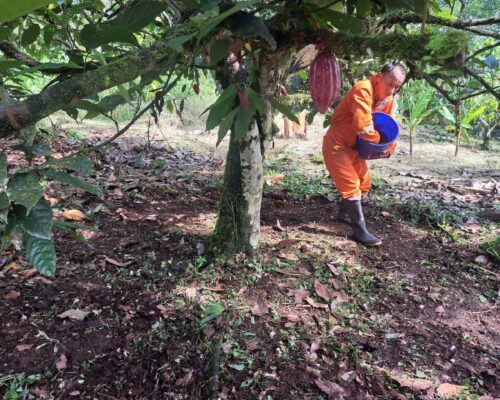
Within the protected area, there are approximately 60 cacao plantations, ranging from 10 to 30 years in age.

When we acquired this land, our goal was to preserve the forest in its original state. In doing so, we aim to safeguard the region’s biodiversity and its traditional, inherited knowledge.

Since 2025, we have been working with these cacao plantations to study traditional cultivation methods—covering everything from plant care, ecological pest control, and harvesting, all the way to the processes used to produce chocolate for consumption.
20261020_150108 (1)

Field Study 2022–2024

In 2022, biology students from the Universidad Central de Quito in Ecuador conducted the first field studies, with the goal of documenting animal species and surveying the area. Since then, camera traps and surveillance cameras have been installed to ensure the ongoing, regular monitoring of specific animal species.

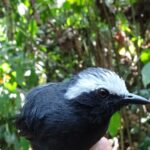
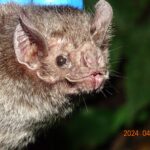
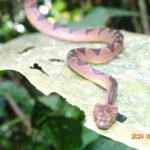
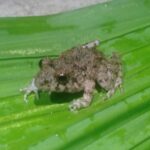
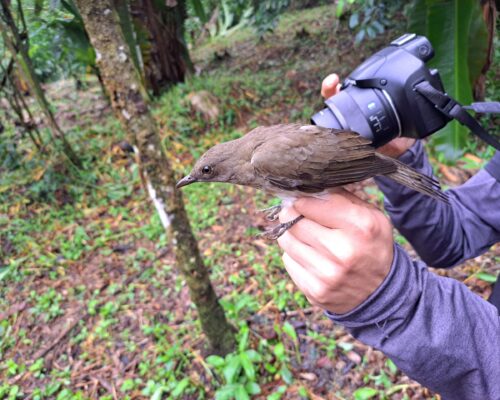
In 2024, these observations continued—this time spanning four consecutive days—resulting in the documentation of approximately 20 bird species, 15 mammal species, and various reptiles and amphibians.
These initial research efforts open up new possibilities for exploring the wildlife in this region.

The information gathered not only fosters greater interest in the biodiversity of the area where the “Amazon Conservation” project is taking place, but also serves as a tool to raise awareness among both visitors and the local population regarding the importance of protecting and respecting the Amazon rainforest.

20240417_070022

List of recorded species:

Water quality of the Llushian River

In 2022 we took two water samples from the Llushian River for a laboratory analysis, one directly from the river and the other from the tap of our hut, to determine if any chemicals or pollutants were contaminating the river.

The results of the laboratory Labsu of Vicariato Apostolico in Coca in the province of Orellana show that 95% of the water is of good quality for consumption. It therefore contains no chemical impurities.

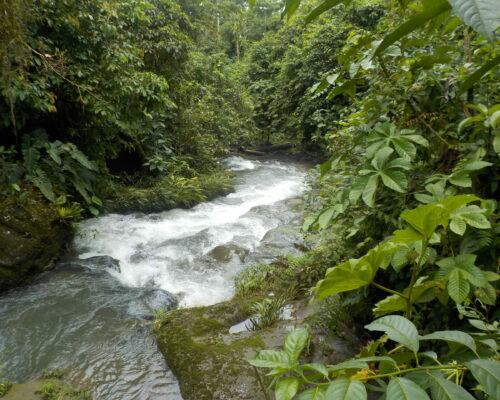
Llushian river

Reforestation with medicinal plants in 2018

In 2018, we carried out a reforestation project focused on “Amazon conservation,” utilizing endemic medicinal plants. We were supported by volunteers who were eager to contribute to the protection of the Amazon rainforest.
We had the opportunity to travel into a primary forest to source the endemic species needed for reforestation in a secondary forest area.
We were accompanied by an experienced shaman, Mario Garces, a member of the Kichwa community of Pastaza. Thanks to him, we gained knowledge about medicinal plants that are now difficult to find in secondary forests. In this way, we received an introduction to each species and its specific medicinal applications.

Among the medicinal plants we successfully transplanted were Guayusa, the dragon’s blood tree, cat’s claw (*Uncaria*), the Ayahuasca vine, wild garlic, *Pitun*, and sour reed.

A Visit to the Shaman’s Jungle

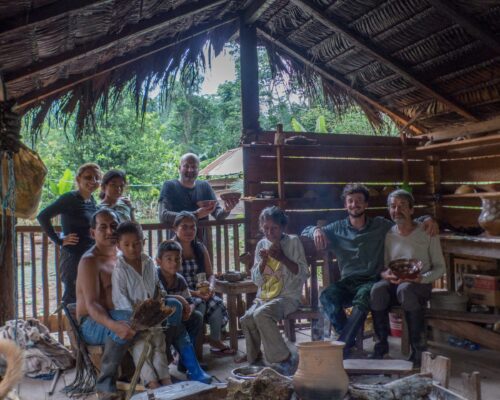
During the “Amazon Protection” reforestation season, we visited the Kichwa community of Villano in the province of Pastaza. We traveled there with the family of the shaman Mario Garces, who helped us organize transport from the town of Puyo to the community of Villano—a journey that took about three hours. Upon arrival, we were welcomed by his mother, Mrs. Clarita. The community is situated deep within the primary Amazon rainforest and lacks both electricity and a supply of drinking water.
We brought enough provisions for a single overnight stay. The experience was truly extraordinary. We set up camp along the banks of the Villano River, built a campfire, enjoyed *maito* (traditional food wrapped in leaves) for dinner, and rested beneath a clear, star-filled sky.
Our group consisted of several volunteers—Friedrich and Simon from Austria, along with our companions Kris and Vero—as well as Don Mario’s family and children, who were with us throughout the trip.
In the evening, an *ayahuasca* ceremony took place; those who wished to participate were required to fast for 24 hours prior to the excursion.
It was an unforgettable, wonderful experience—a profound connection and communion with nature.

P1020626

Establishment of the “Amazon Conservation” nature reserve

Im Jahr 2016 wurde in Wien, Österreich, der gemeinnützige Verein „Amazonasschutz“ gegründet. Ziel ist es, ein Schutzgebiet für Flora und Fauna zu schaffen, das der Erforschung und Untersuchung der Natur dienen soll. Damit soll die Gesellschaft und alle, die Interesse am Amazonasgebiet haben, sensibilisiert und aufgeklärt werden.

Amazonasschuzt Gebiet