As part of a field study conducted from April 14 to 18, 2024, biologist David Matilla from the Central University of Quito, Ecuador, identified the following bat species.
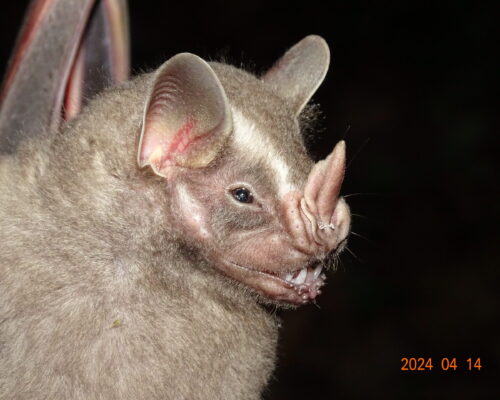
- Scientific name: Artibeus lituratus
- Common name: Greater fruit-eating bat.
- Classification: Class: Mammalia, Order: Chiroptera, Family: Phyllostomidae.
- Habits: Feeds on fruit—particularly figs (genus Ficus) as well as flowers, nectar, and some insects. Important seed disperser. Nocturnal and social (Tirira, 2017).
- Capture method: Capture, mist net.
- Capture location: Nets at the canopy level, nets over ponds and in fields.
- Source and date: David Mantilla (April 2024)
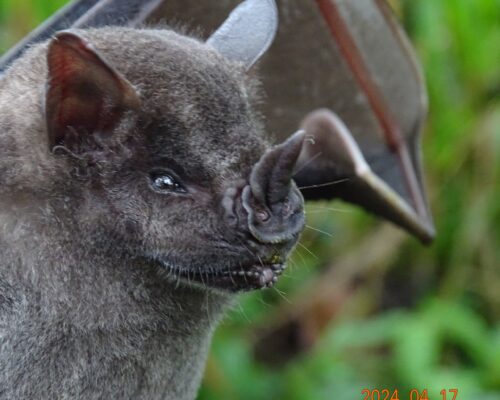
- Scientific name: Artibeus planirrostris
- Common name: Flat-faced fruit bat
- Classification: Class: Mammalia, Order: Chiroptera, Family: Phyllostomidae.
- Habits: Feeds on fruits, flowers, nectar, and some insects. Important seed disperser. Nocturnal and social (Tirira, 2021).
- Capture method: Capture, mist net.
- Capture location: Nets near water tanks and harvest nets.
- Source and date: David Mantilla (April 2024).
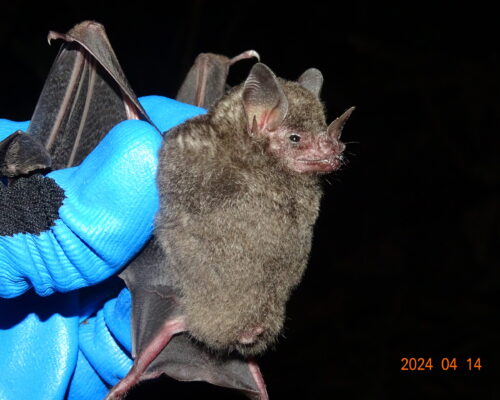
- Scientific name: Carollia brevicaudum
- Common name: Short-tailed silky bat
- Classification: Class: Mammalia, Order: Chiroptera, Family: Phyllostomidae.
- Habits: It feeds on the fruits and seeds of the genus Piper. It is nocturnal and gregarious, and is frequently found in areas heavily influenced by humans or in stages of regeneration (Tirira, 2017).
- Capture method: Capture, mist net.
- Capture location: Nets in the field.
- Source and date: David Mantilla (April 2024).
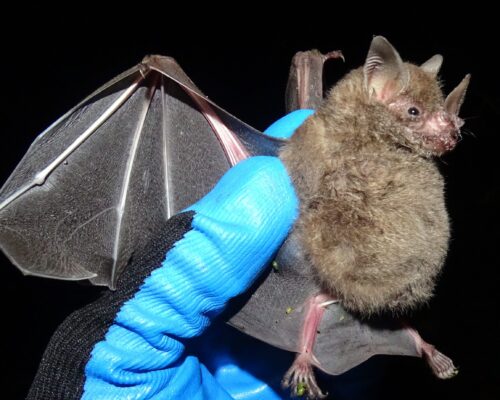
- Scientific name: Carollia perspicillata
- Common name: Seba’s short-tailed bat
- Classification: Class: Mammalia, Order: Chiroptera, Family: Phyllostomidae.
- Habits: Seba’s short-tailed bat feeds primarily on low-fiber fruits with high protein content. Like all members of the genus Carollia, it specializes in the fruit of pepper plants (Piper). It consumes up to 35 fruits per night, making it an efficient and therefore important seed disperser (Tirira, 2017).
- Capture method: Capture, mist net.
- Capture location: Nets in the field.
- Source and date: David Mantilla (April 2024).
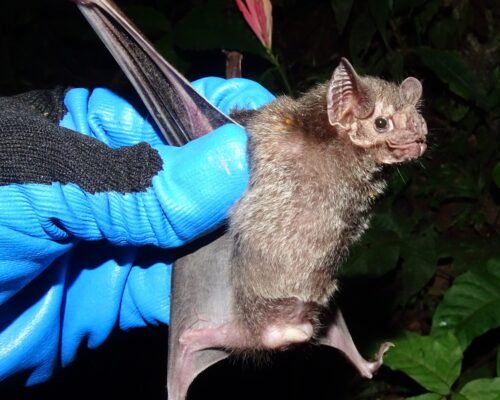
- Scientific name: Desmodus rotundus
- Common name: Vampire bat
- Classification: Class: Mammalia, Order: Chiroptera, Family: Phyllostomidae, Subfamily: Desmodontinae.
- Habits: It feeds on the blood of large mammals. It is the only bat species capable of moving both in the air and on the ground (Tirira, 2017).
- Capture method: Capture, mist net.
- Capture location: Nets near the river.
- Source and date: David Mantilla (April 2024).
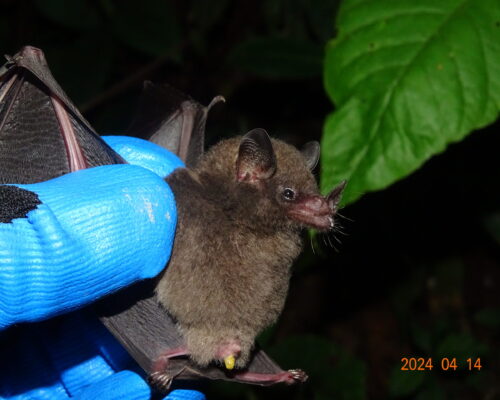
- Scientific name: Glossophaga soricina
- Common name: Pallas’s long-tongued bat
- Classification: Class: Mammalia, Order: Chiroptera, Family: Phyllostomidae.
- Habits: It feeds on nectar, pollen, small fruits, and occasionally insects found on flowers. It is nocturnal and lives in groups (Tirira, 2021).
- Capture method: Capture, mist net.
- Capture location: Nets near the river.
- Source and date: David Mantilla
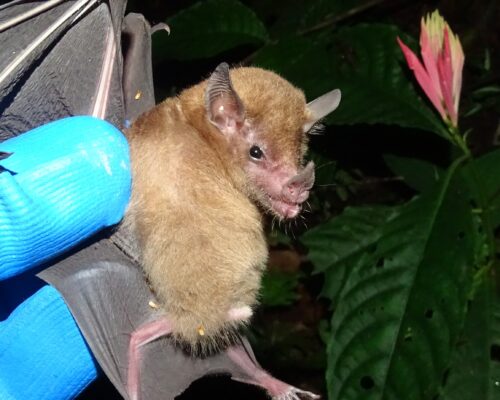
- Scientific name: Lionycteris spurrelli
- Common name: Chestnut long-tongued bat
- Classification: Class: Mammalia, Order: Chiroptera, Family: Phyllostomidae.
- Habits: It feeds on nectar, pollen, and small insects. It lives singly or in pairs and does not form large colonies. It is nocturnal and social (Tirira, 2021).
- Capture method: Capture, mist net.
- Capture location: Nets near the river.
- Source and date: David Mantilla (April 2024).
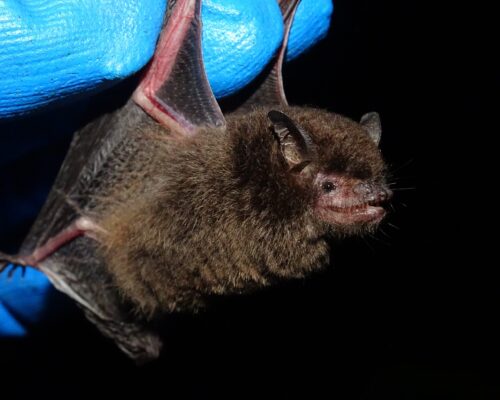
Scientific name: Myotis sp.
Common name: Myotis bat
Classification: Class: Mammalia, Order: Chiroptera, Family: Vespertilionidae
Habits: They feed on small flying insects and prefer areas near bodies of water or within the forest canopy. They live in colonies of hundreds of individuals and may coexist with bats of other species.
Capture method: Capture, mist net.
Capture location: Net over the river.
Source and date: David Mantilla (May 2021)
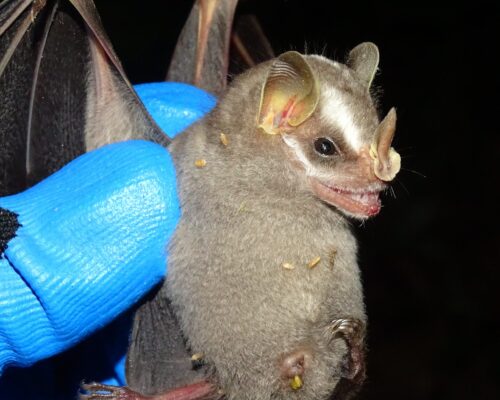
- Scientific name: Platyrrhinus brachycephalus
- Common name: Short-headed broad-nosed bat
- Classification: Class: Mammalia, Order: Chiroptera, Family: Phyllostomidae
- Habits: They feed primarily on fruit, but also on nectar and insects. Nocturnal and social (Tirira, 2017).
- Capture method: Capture, mist net.
- Capture location: Nets at the upper edge.
- Source and date: David Mantilla (April 2024).
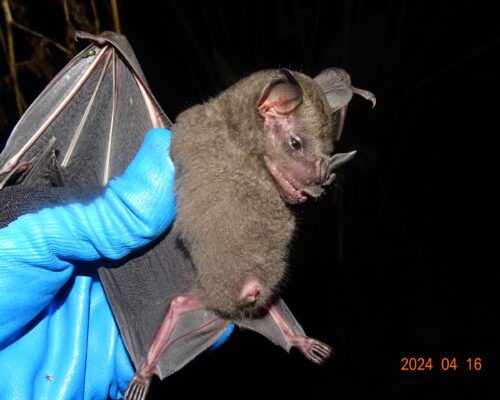
- Scientific name: Platyrrhinus infuscus
- Common name: Pale-striped fruit-eating bat or Yellow-brown broad-nosed bat.
- Classification: Class: Mammalia, Order: Chiroptera, Family: Phyllostomidae.
- Habits: This bat feeds almost exclusively on fruit and plant seeds, such as those from plants in the nettle family. It is nocturnal and lives in groups (Tirira, 2021).
- Capture method: Capture, mist net.
- Capture location: Field edges, nets near the Chonta palm.
- Source and date: David Mantilla (April 2024).
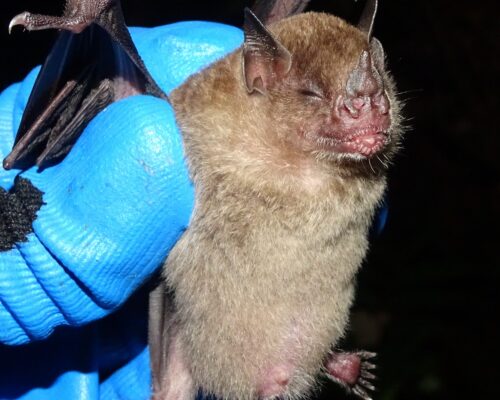
- Scientific name: Sturnira giannae
- Common name: Gianna’s yellow-shouldered bat
- Classification: Class: Mammalia, Order: Chiroptera, Family: Phyllostomidae.
- Habits: Feeds on fleshy fruits, nectar, pollen, and some insects. Nocturnal and social (Tirira, 2017).
- Capture method: Capture with a net.
- Capture location: Net near the river.
- Source and date: David Mantilla (April 2024).
